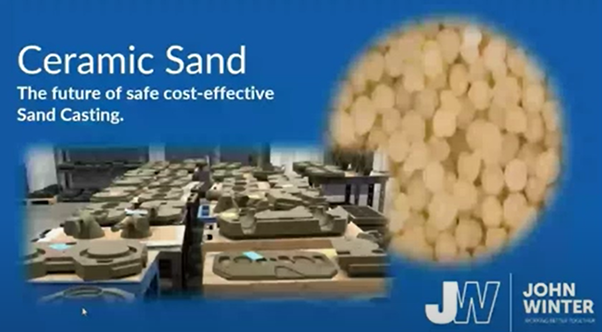

The West Midlands branch welcomed 40 attendees from the UK and from further afield, including some on-line, to its recent technical seminar with speaker, Andrew Tagg, Technical Director of John Winter & Co Ltd, at the normal venue in Wednesbury.
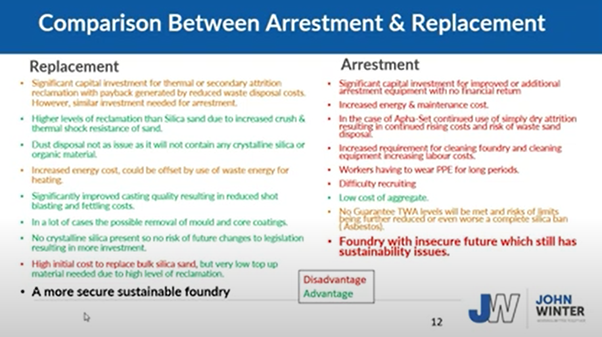
John clearly explained the difference between crystalline sand and amorphous sand whilst demonstrating his deep knowledge and understanding of global trends as he outlined how, in his considered opinion, the future of the sand casting industry will move towards tighter controls on permitted exposure levels for employees working with the risk of exposure to crystalline silica dust. He noted that exposure level limits are externally controlled and are likely to follow the direction that regulators in the USA are heading to, which will mean lower exposure limits and require greater controls. Abatement of exposure and existing control systems will, he noted, require additional power use and plant capital costs, without any quality or productivity gains.
His presentation included an informative comparison of the advantages and disadvantages of replacements for crystalline sand, using data from industrial plants around the world that have switched to mould production based on use of 100 % ceramic beads, such as CeraBead®.
The level of interest for this technical lecture was again clearly shown in the extent of the Q & A session at the end of the lecture and Andy showed his depth of expertise in this field with some well-informed answer.
Following a vote of thanks from Colin Whorton MICME, Elite Centre for Manufacturing Skills, National Foundry Training Centre, the attendees thanked him in the usual way with a round of applause.
The buffet was also kindly sponsored by John Winter & Co Ltd.