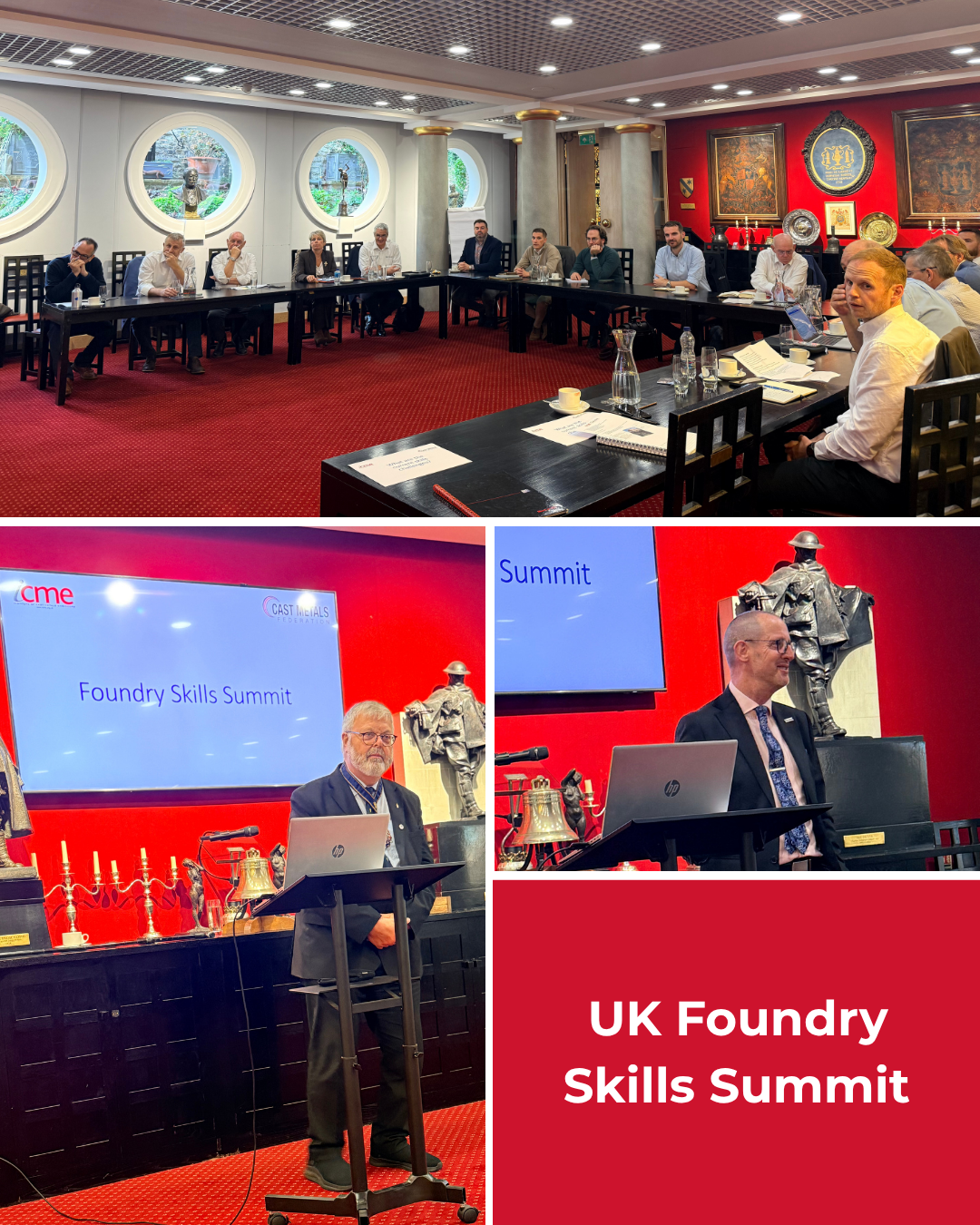
On Thursday, 15th October 2026, the Institute of Cast Metals Engineers (ICME), the Worshipful Company of Founders and the Cast Metals Federation (CMF) brought together industry representatives for the UK Foundry Skills Summit to explore current skills challenges and identify ways to prepare for the future of the UK cast metals industry.
The summit provided an opportunity for representatives from across the industry to share experiences, discuss emerging workforce needs and explore practical ways to improve skills development across UK foundries.
Lee Marshall, CEO of the Cast Metals Federation, welcomed the opportunity to bring the industry together:
“Collaboration is essential if we’re to address the skills challenges facing our industry. Bringing people together to share experiences, ideas and perspectives is an important step towards finding solutions and building a strong future for UK foundries.”
Three key areas of discussion
Discussions throughout the day focused on three key areas:
- Understanding today’s skills challenges – identifying skills gaps, barriers to training and the risk of valuable knowledge being lost as experienced employees retire.
- Preparing for the future – exploring how evolving technologies, AI and changing business needs will shape the skills required over the next three to five years.
- Turning conversations into action – sharing ideas on making training more accessible, overcoming barriers and identifying practical steps to improve skills development across the industry.
The value of bringing foundries together to discuss these shared challenges was highlighted by one summit attendee, Adam Dalby, Managing Director at Brafe Engineering:
“Every foundry is different, with its own markets and skills needs, yet we face strikingly similar challenges. Collaboration is key to addressing these shared issues, and working together offers a real opportunity to improve skills development across the industry.”
Adapting training for the future
Alongside the need to address existing skills gaps, discussions highlighted the importance of ensuring training keeps pace with technological developments and the changing needs of the industry.
Amy Worrallo, ICME Training and End-Point Assessment Manager, highlighted why investing in training is so important:
“Developing employees is vital to the long-term success of the foundry industry. Training helps businesses build skills, retain valuable knowledge and prepare their workforce for change, whilst giving employees the opportunity to grow and develop.”
Another summit attendee, Phil Rawnson, Managing Director of MRT Castings, emphasised the need to balance traditional foundry skills with emerging technologies:
“Whilst maintaining and improving traditional foundry skills training remains essential, the growth of technologies such as simulation, robotics and AI means we must also evolve our approach to training. With rising costs and increasing complexity in the components we produce, there has never been a more important time to build partnerships and pathways that share skills, inspire teams and build capability across the UK foundry industry.”
Working together to build future skills
The discussions reinforced the importance of collaboration in supporting businesses, developing the skills the industry needs and building a sustainable workforce for the future.
The focus now is on turning the insights and ideas shared at the summit into meaningful action, with continued collaboration across the industry playing an important role in addressing skills challenges and supporting the long-term future of UK foundries.
ICME would like to thank everyone who attended and contributed their experiences and ideas to the summit.
